




15th October 2026
How Do Automatic Cat Feeders Work?
-
 author

For most owners, the question “how do automatic cat feeders work?” comes down to dinner: if a meal is saved, will food appear in the bowl at the right time? One half of the feeder handles the instruction. The other half does the physical work of moving kibble from hopper to bowl.
That split is easy to see during a DUODPET sample check. A missed app command sends the investigation in one direction, while a motor that runs without a clean drop sends it in another.
How Do Automatic Cat Feeders Work From App to Bowl?
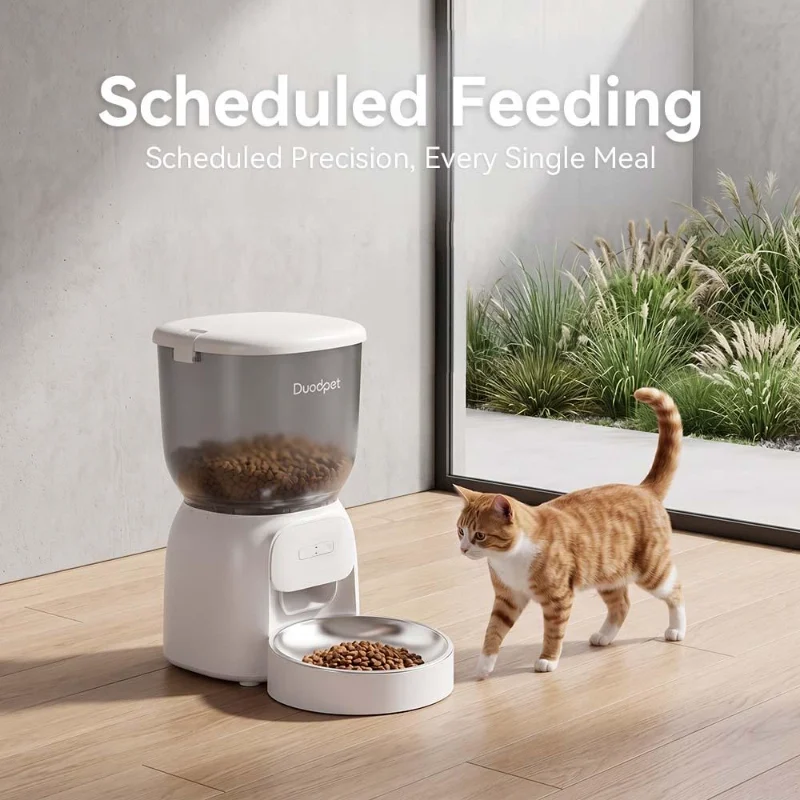
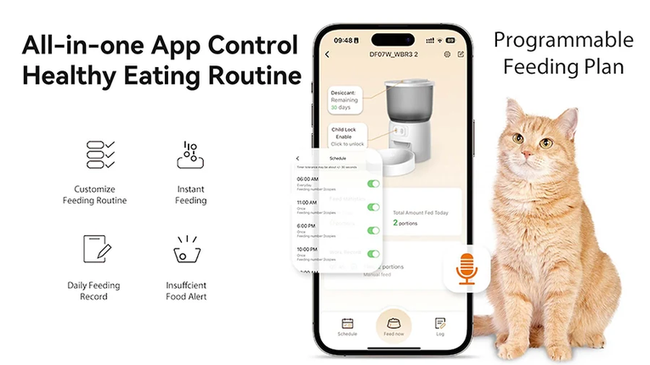
A connected feeder first receives a schedule or a request to feed immediately. Its controller interprets the requested time and portion count, then starts the dispensing drive when the instruction is due. Food moves out of the hopper in controlled cycles and drops through the outlet. After the requested cycles finish, the drive stops and the food remains in the bowl for the cat.
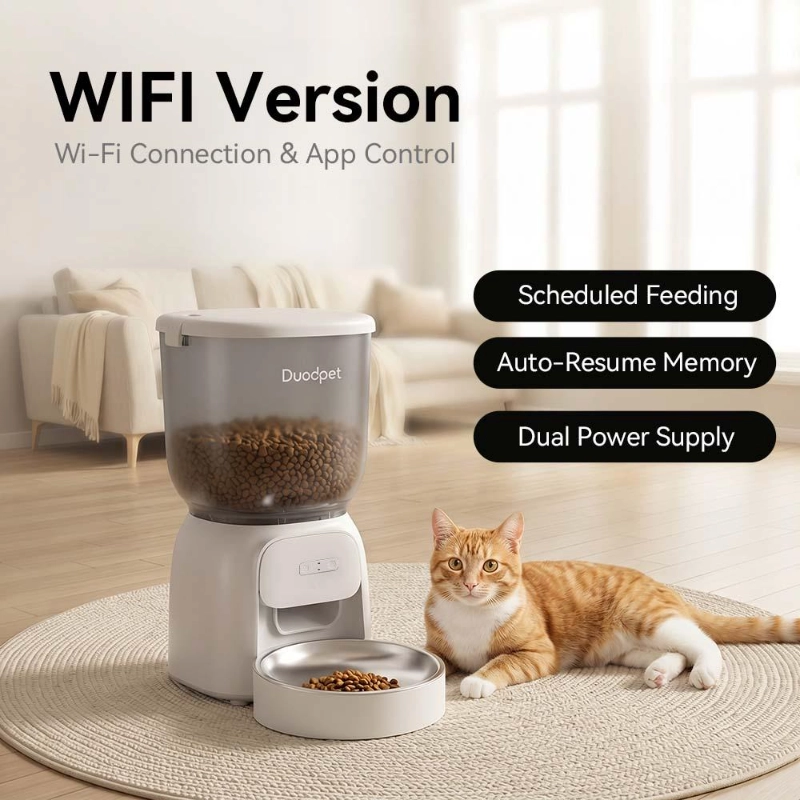
With the DUODPET F01-W WiFi timed feeder, a 2.4 GHz connection carries the user's setup. The controller can hold between one and six meal times for a day, with one to fifteen portions assigned to a meal. Those figures describe what the feeder will attempt. They do not tell the owner how many calories belong in the cat's bowl.
Timing and Dispensing Are Separate Jobs
Think of the clock and the food path as two checkpoints. A correct time on the display clears the first checkpoint, but it says nothing about kibble at the outlet. Motor noise clears neither question about quantity nor the final question: what actually landed in the bowl?
Automatic feeders are not all built around the same internal part. Depending on the model, a manual might mention a wheel, gate, or auger. The current F01-W page does not give its metering component a name, so the honest description stops at what a user can verify: the drive begins, food advances, and the drive ends the cycle. Anything more specific would be guesswork.
Portion Weight Depends on the Food
The F01-W page pairs an approximate 10 g portion with a ±2 g tolerance. That tolerance matters because the machine meters pieces, not identical laboratory weights. Kibble shifts as the hopper empties, and airy, angular pieces fill a space differently from dense round pellets.
Calibration is best done with the food the cat normally eats. Run one portion four times, weigh each result, and calculate a simple average. That working number can be compared with the cat’s daily feeding allowance. A new bag with a different shape or density deserves another check, even when nobody has touched the portion setting.
The Outlet Sets a Physical Limit
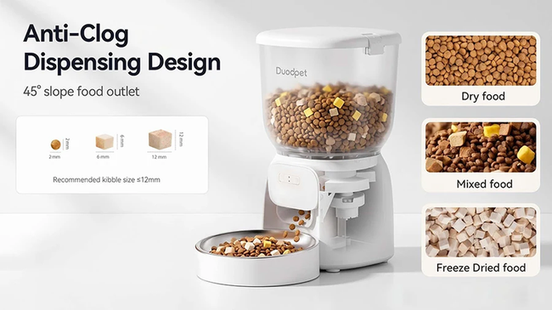
Once food leaves the metering area, gravity carries it through the outlet. DUODPET lists 3–12 mm kibble for the F01-W, but a ruler tells only part of the story. Flat pieces can catch where round pellets roll, and a large freeze-dried morsel may disturb an otherwise even blend.
During a store test, watch several drops with the buyer’s intended food. If pieces repeatedly hang at the edge, adding more portions will not make the opening wider. A clean run is a much better sign of fit. The smart pet feeder selection guide places this quick check within a broader product review.
The Feeder Finishes at the Bowl
The feeder’s job ends when kibble reaches the bowl. What happens next is still a household matter. One cat may eat at once, a second pet may steal the serving, or the bowl may sit untouched. Leftovers and a sudden change in appetite still need a person’s attention, and multi-pet homes may need an additional way to manage access.
A camera can add a view of the feeding area, but this is distinct from ordinary timed dispensing. We avoid describing a basic feeder as an appetite monitor. Its reliable task is narrower: make the scheduled portion available.
Power also belongs to this operating boundary. The F01-W uses a DC 5 V adapter and accepts three D-cell alkaline batteries as backup. DUODPET describes the batteries as support for scheduled release during a power interruption. Remote access still depends on equipment outside the feeder, including the router. Test a stored schedule and an app command as two different functions. Other devices in the DUODPET feeding range have different requirements, especially models that cool wet food.
Cleaning the Parts That Affect a Serving
Every serving leaves a little dust or oil behind. Build-up at the outlet can interfere with the next drop; build-up in the bowl is a cleanliness concern. Both spots need routine care, though the safe cleaning method may differ between a removable part and the powered housing.
On the F01-W, the 304 stainless-steel bowl lifts out. DUODPET’s official image also marks other food-contact pieces as removable and cautions against washing the main powered body. Follow the model instructions, let washed parts dry, and refit them carefully before running a test portion. Care boundaries vary across the DUODPET product range, which is why the manual beside the actual unit should settle any doubt.

Put the Explanation Into a Store Demonstration
In a store, one live cycle is more useful than a long description. Staff can save a meal, request a single portion, watch the outlet, and weigh the result. The same unit can then be used to show the safety lock, the approved battery procedure, and a post-cleaning test after the removable parts have been refitted.
This compact routine is useful during distributor sample approval too. A failed step points to a smaller area for follow-up: setup, the food path, power, or reassembly. It is a more productive starting point than a vague report that “the feeder did not work.” Current manuals, commercial terms, and technical help are available through DUODPET distributor support.
FAQs
Q: Do automatic cat feeders dispense an exact weight every time?
A: No. F01-W specifications include a tolerance around the approximate portion weight. Weigh a few drops made with the cat’s own kibble instead of treating the first drop as exact. Check again after changing to a noticeably different food.
Q: Will an automatic cat feeder work if Wi-Fi goes down?
A: Some models can keep a locally saved schedule even when remote app control is unavailable, but buyers should verify the behavior of their model. Save a near-term test meal, disconnect the network, and watch what the unit does. Then compare that result with the manual.
Q: Can an automatic cat feeder be used for wet food?
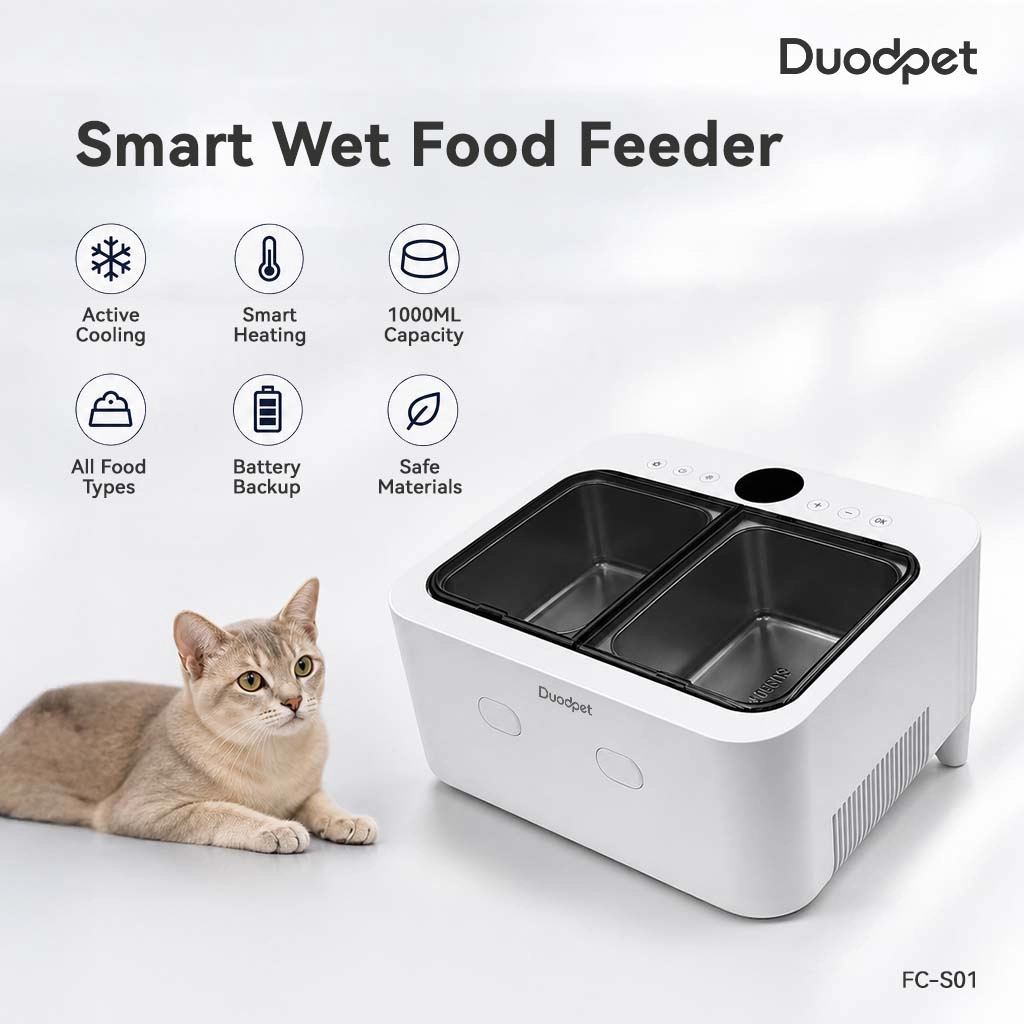
A: A dry-food hopper should not be loaded with wet food unless its manufacturer explicitly permits it. Choose a feeder designed for wet meals and follow that model’s directions for temperature control, cleaning, timed access, and power.