



29th October 2026
Cat Refuses to Eat From an Automatic Feeder: Noise, Placement, and Bowl Habits
-
 author

The feeders will drop the food at the correct time, but you find your cat beside the old bowl and staring at you. It is likely that your cat is not comfortable with the system and not the food. You should hear the engine running, check the path to the bowl, and the tilt of the head. Those three checks solve many “my cat refuses the feeder” problems.
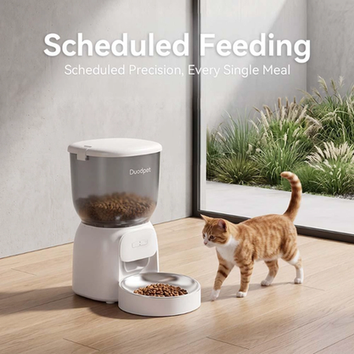
Why does a new feeder feel wrong?
A cat’s regular bowl carries familiar smells. The feeding area is an important component of the routine. The automatic feeder provides a new smell, sight, and sound within the same day. While some cats examine the area and move away, others wait for the hand-fed meal since it has always done the trick.
Put the usual food in the new bowl without turning the machine on. Should your cat eat in the bowl, then the problem may be the dispensing of food. If the cat rejects the new bowl but eats the old one, try testing the form and material of the bowl. In case the cat skips meals entirely, stop training as lack of appetite can be a medical issue.
What if the feeder is too noisy?
The sudden sound of whirring may startle a cat more than a usual house noise since it occurs near the food source. After one surprise, the cat may wait at a distance. After several, it may decide the feeder is unsafe.
Run one cycle when the cat is elsewhere. Later, let the cat inspect the quiet machine. Put a few pieces of familiar food close to the entryway before you do another run through. Do not use much and stop before the cat gets nervous. This takes a little longer, but it helps the cat make a positive association.
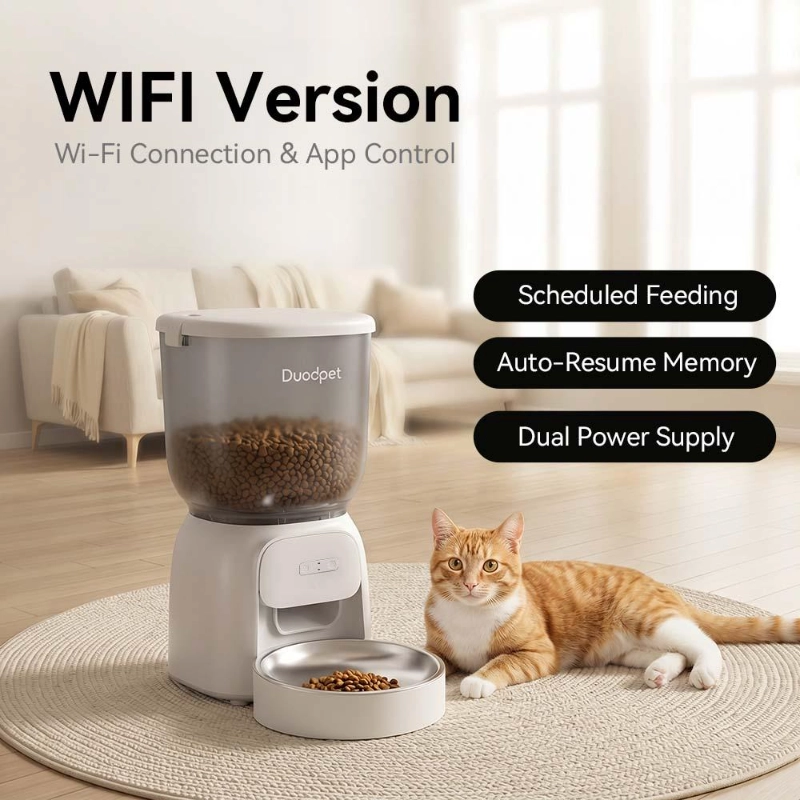
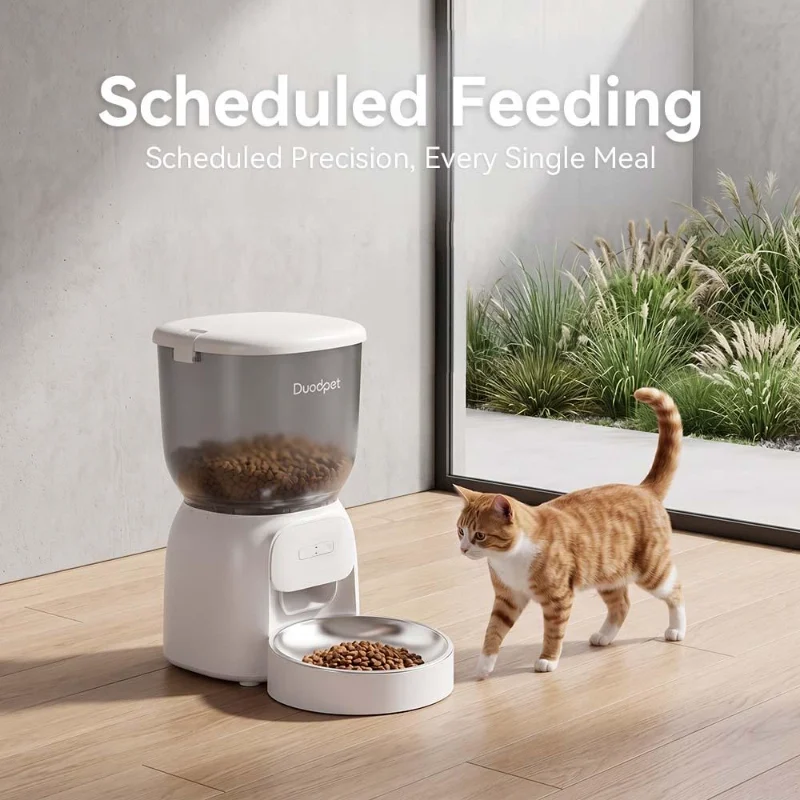
Use a quiet time for the first scheduled meal and switch off optional alerts when the device allows it. The Duodpet F01-W 4L WiFi Smart Timed Automatic Feeder supports scheduled portions and remote changes, so you can adjust timing without waiting beside the machine.
Is the location making the cat nervous?
Cats like to eat in places from which they have a view of the room and can leave without trouble. A feeder that is near the washing machine, speaker, door, or litter box can be completely acceptable to people but not to the cat. For two cats in the same house, a tight corner can enable one cat to block the other.
Consider a spacious area that is relatively quiet, and give the old bowl its space for a while if it helps. If your cat has always eaten against a wall, start there. After the cat has got used to the new meal, you will be able to move the feeder slowly.
Feel for any sliding in the base or rattle in the lid after placing it down. Protect the cable from the cat's paws and teeth. The Duodpet Feeder collection provides an overview of the brand’s dry-food feeder options and their different forms.
Could the bowl be uncomfortable?
Whiskers are sensitive, and a narrow bowl can trigger them with every bite. A high rim, a slippery surface, or an odoriferous dishwashing liquid will do just that. The cat may nibble a little and then leave the place although hungry.
Test a shallow dish with the same food and in the same spot. If the cat nibbles the food, the dispenser may not be the problem. Clean the surface with an odorless cleaning agent and eliminate the traces of crumby food. It is good to use a bowl made of stainless steel that is easy to clean and doesn't retain any food scent compared to other materials.
The F01-W model has a detachable 304 stainless steel bowl which dispenses dry food 3 to 12 mm. It can deliver portions of about 10 g ± 2 g. Begin with a small portion and watch the cat’s posture. The published specification is useful, but the cat’s comfort decides whether the bowl works.
How do you switch without creating a battle?
For a few days, use the feeder as a stationary bowl. Do not ask it to make noise yet. When the cat eats comfortably, supervise one dispensing event. Keep the remaining meals familiar. Add a second automatic meal only after the first one is routine.
Do not take away every backup bowl or push the cat toward the machine. A short note can help you spot the pattern: when the feeder runs, where it stands, how much the cat eats, and whether another pet is nearby. If the cat stops eating altogether, vomits, seems weak, or shows pain, contact a veterinarian instead of changing the schedule again.
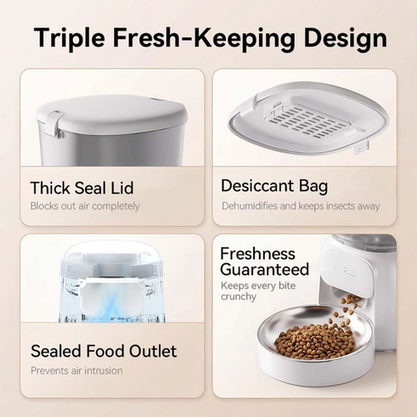
Why does the supplier’s design approach matter?
A feeder is used every day, in real homes with noise, cables, children, and more than one pet. Duodpet describes a Shenzhen factory established in 2006, in-house engineering and manufacturing, ISO 9001 certification, and structural and stress testing. These details matter to buyers looking for a product designed around ordinary feeding habits.
The About Duodpet page explains the company’s manufacturing background. Retailers can also read its guide to choosing a smart pet feeder before comparing portion control, cleaning, backup power, and support.
Conclusion
Begin with small changes. Allow your cat to listen to the feeder from afar, place the feeder in a quiet location, and see how the bowl stacks up to the whiskers. Introduce automatic feeding gradually. You do not want your cat to have to conform to a machine but rather a machine to a cat’s routine.
FAQs
How long does acceptance usually take?
A confident cat may accept the feeder in a few meals. A cautious cat may need one or two weeks. Keep the old bowl available while the new routine develops.
Should I remove the feeder’s sound?
Turn off optional beeps. For the motor, use gradual exposure so the noise becomes familiar rather than surprising.
What if the cat refuses all food?
Treat that as a possible health concern. Contact a veterinarian promptly, especially when vomiting, lethargy, pain, or dehydration is present.