




7th August 2026
How Do Vet Clinics Benefit from a Smart Feeder for Cats?
-
 author

Feeding may look like a basic part of veterinary care, yet it often provides valuable clinical information. A cat that refuses breakfast, eats too quickly, or leaves half a meal may be showing pain, nausea, stress, or a response to medication. In a busy clinic, however, staff members cannot watch every bowl throughout the day.
A smart feeder for cats can bring greater order to this daily task. It delivers food at planned times, controls portions, and may provide remote viewing or wet-food temperature management. For veterinary clinics, these functions support more consistent inpatient care while reducing repetitive work for nurses and assistants.
The value is especially clear as feline obesity and long-term disease management receive more attention. The Association for Pet Obesity Prevention continues to promote weight, body condition score, owner perception, and feeding behavior as important clinical measures. A feeding device cannot make a diagnosis, but it can help the clinic carry out a veterinarian’s nutrition plan more reliably.
Why Feeding Accuracy Matters in Veterinary Practice
Nutrition plans are only useful when the correct food reaches the correct patient at the correct time. This sounds simple, but real clinics manage animals with different body weights, medications, feeding restrictions, and recovery needs. Written notes alone may not prevent late meals, oversized portions, or missed observations during a busy shift.
More Consistent Portion Control
Free-choice feeding can lead some cats to consume more energy than they need. The AAHA feline nutrition guidance notes that overweight cats face greater risks of conditions such as diabetes, lameness, skin disease, and urinary obstruction.
A portion control feeder for cats helps staff divide a daily allowance into measured meals. This can be useful for:
- Weight-loss patients receiving a controlled calorie intake
- Cats that eat too quickly and vomit afterward
- Diabetic cats following a coordinated food and medication schedule
- Patients that need several small meals instead of one large serving
- Cats whose appetite must be checked during treatment
Portion size still needs to be based on food energy density and the veterinarian’s calculation. Feeder portions should therefore be weighed before routine clinical use rather than treated as universal calorie units.
Clearer Appetite Observation
Appetite changes may be an early sign that a cat’s condition has changed. A scheduled feeder creates defined meal windows, making it easier to see whether the patient approaches the bowl, finishes the serving, or stops eating.
Models with a camera offer another practical benefit. Staff can look at the bowl area without repeatedly entering an enclosure and disturbing a nervous cat. Recorded observations may also help separate true appetite loss from problems such as spilled food, feeder blockage, or another animal reaching the meal.
Reducing Repetitive Work Without Reducing Clinical Oversight
Automation should support veterinary staff, not replace their judgment. The strongest use case is handling predictable feeding actions while nurses remain responsible for patient checks, cleaning, food preparation, and medical decisions. This balance can save time without turning an important clinical task into an unattended process.
Scheduled Meals Across Busy Shifts
An automatic cat feeder for vet clinics can release meals during consultations, shift handovers, or overnight periods. The schedule remains stable even when the team is handling an emergency.
This helps clinics create repeatable routines:
- Label the feeder with the patient’s identity and diet.
- Weigh the planned daily food amount.
- Program the approved meal times and portions.
- Record food offered and food remaining.
- Check the patient directly when appetite changes.
- Clean all food-contact parts between patients.
The feeder should never be used for cats that require direct supervision while swallowing or for patients at risk of aspiration. Those animals need hands-on feeding and clinical observation.
Better Support for Short-Term Inpatients
A hospitalized cat may become stressed when people frequently open the enclosure. Timed feeding can reduce unnecessary interruptions while keeping meals predictable. A familiar recorded voice may also help some cats approach food, although clinics should judge this response individually.
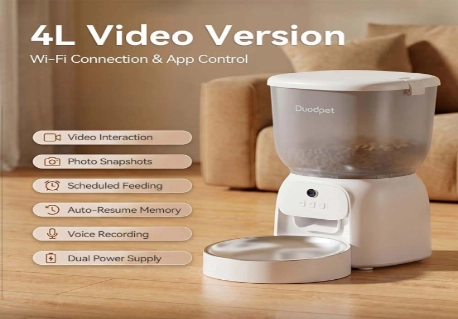
At DUODPET, we design feeding products around reliable daily care. Our 4 L smart feeding products include scheduled portions, safety locks, stainless steel bowls, and backup power options. Our video feeder also supports remote bowl checks and a 10-second voice message, giving clinic teams another way to observe mealtime activity.
Supporting Weight Management and Long-Term Care
Many nutrition problems are not solved during a single appointment. Progress depends on what happens at home for weeks or months. A clinic can use a smart feeder during treatment, demonstrate it before discharge, and show owners how a written feeding plan becomes a practical daily routine.
Making Weight-Loss Plans Easier to Follow
Owners often hear “feed less,” but this instruction can be too vague. A better plan states the food, daily amount, number of meals, and review date. A scheduled feeding device removes some guesswork and limits unplanned refilling.
For an overweight cat, the clinic can demonstrate how to:
- Measure the full daily ration with a kitchen scale
- Divide it into several smaller meals
- Avoid adding treats without counting their calories
- Review body weight and body condition score regularly
- Report persistent hunger, vomiting, or food refusal
Sudden severe food restriction is unsafe for cats. Cornell University’s feline feeding guidance warns that inadequate food intake can contribute to serious problems, including hepatic lipidosis. Any weight-loss program should therefore remain under veterinary direction.
Helping Owners Continue Care at Home
Discharge instructions are more effective when owners can repeat the clinic’s feeding routine. Staff can provide a simple schedule and ask owners to record appetite, vomiting, stool changes, and leftover food.
A smart cat feeder with camera may also help owners confirm that food was released and that the cat approached the bowl. These observations can support follow-up discussions, but video alone cannot confirm pain, hydration status, nausea, or recovery. Owners should contact the clinic when behavior changes rather than waiting for the next scheduled visit.
Expanding Feeding Options for Different Clinical Needs
Dry-food dispensers suit many weight and schedule plans, but they are not the only choice. Cats recovering from dental work, surgery, dehydration, or digestive illness may need moist, soft, or warmed food. Clinics should match the feeder type to the patient instead of forcing one device into every case.
Dry Food for Measured, Frequent Meals
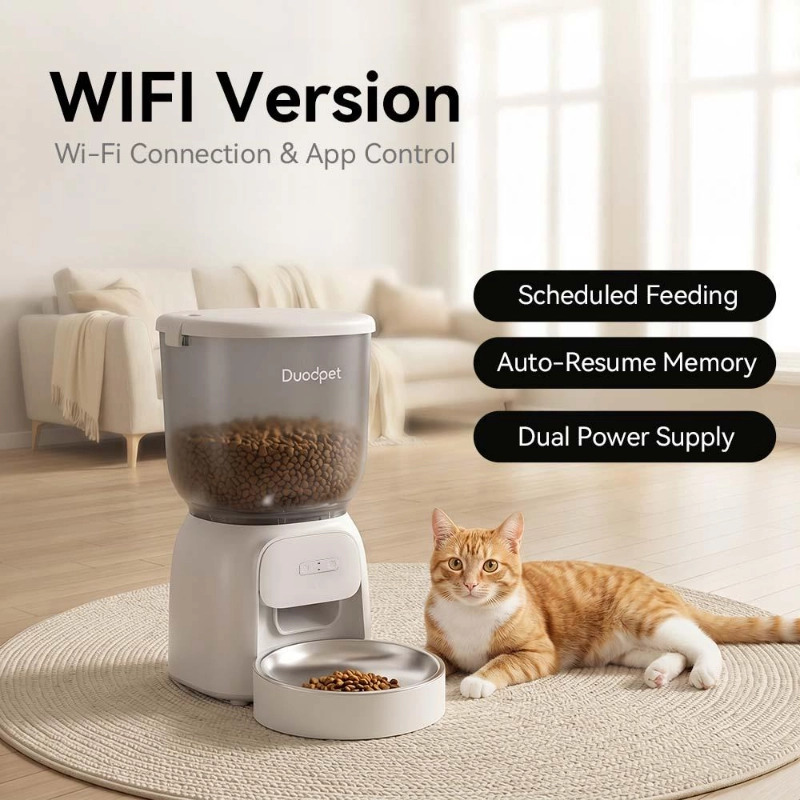
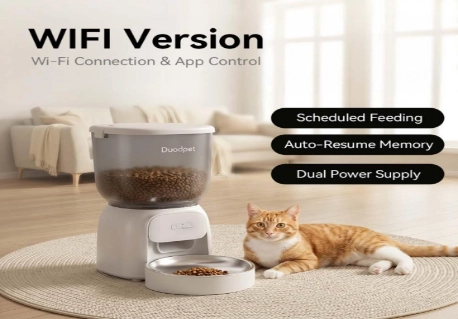
The DUODPET 4 L Wi-Fi feeder can schedule 1–6 meals daily, while the video model supports up to 10 meals. Each portion is approximately 10 g ±2 g and works with dry kibble measuring 3–12 mm.
We include a 304 stainless steel bowl that can be removed for cleaning. Backup batteries keep scheduled dispensing active during a power failure, although network and video functions may be unavailable in battery mode. A control lock also prevents paws or accidental contact from changing the program.
Wet Food for Hydration and Recovery
Wet food commonly contains substantial moisture, and Cornell’s feline hydration guidance identifies wet feeding as one way to increase water intake. Yet wet food cannot remain unprotected at room temperature for long periods.
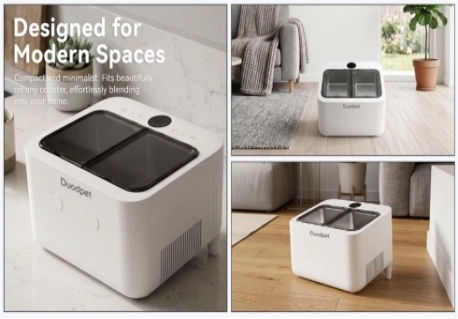
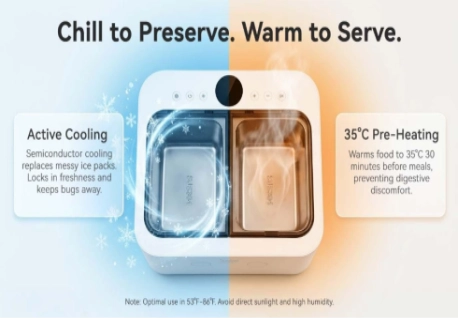
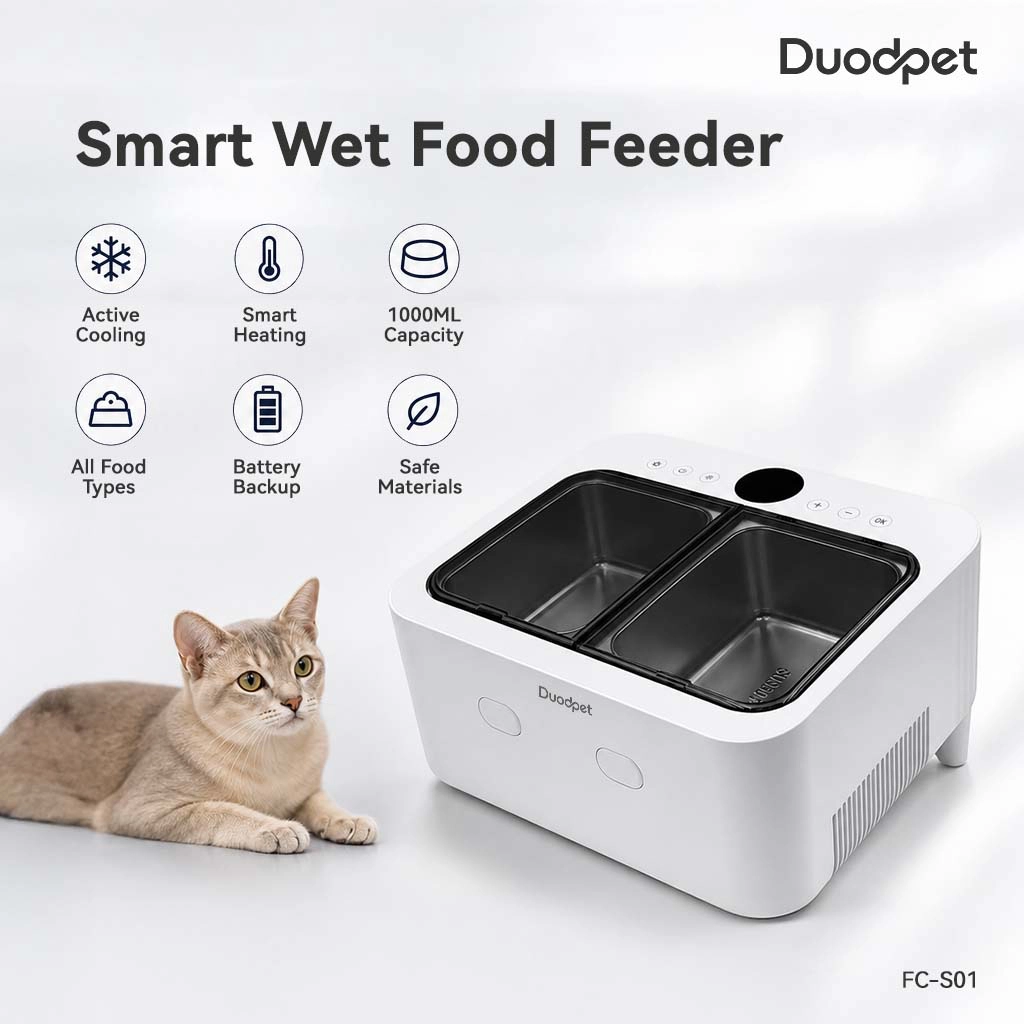
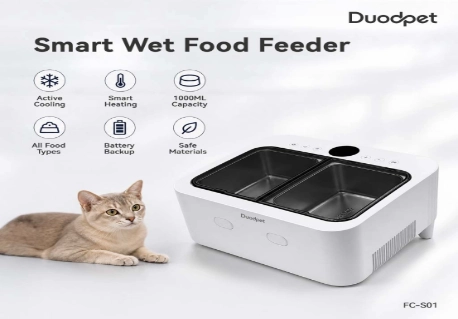
Our feeding range includes a dual-chamber wet food feeder with active semiconductor cooling rather than replaceable ice packs. Its total capacity is 1 L, divided into two 0.5 L stainless steel bowls. Before mealtime, the device can gradually warm food to about 35°C, which may be more comfortable for cats that dislike chilled meals.
The bowls detach for washing, while local controls allow the schedule to run without relying on Wi-Fi. Clinics should still follow their own food-safety rules, discard contaminated leftovers, and disinfect removable parts between patients.
Choosing a Smart Feeder for Clinical Use
A home feeder and a clinic feeder may perform similar actions, but clinical use demands stricter procedures. Before purchase, the team should assess the device against its patient population, cleaning policy, electrical safety rules, and staff workflow.
Key selection points include:
- Repeatable portion delivery
- Easy-to-read local controls
- A lock that prevents accidental changes
- Removable, nonporous food-contact parts
- Suitable capacity for the planned care period
- Backup power for scheduled meals
- Compatibility with the clinic’s food sizes and types
- Clear cleaning and maintenance steps
- Camera access controls where video is used
- A manual feeding option for unexpected changes
Run a short trial before placing the feeder in routine service. Weigh several dispensed portions, test a simulated power cut, inspect the food path, and confirm that every shift can clean and program the unit correctly.
Conclusion
A smart feeder for cats can make veterinary feeding more timely, measurable, and easier to document. It is useful for portion-controlled diets, small frequent meals, inpatient appetite checks, wet-food care, and owner education before discharge. Camera access and backup power add practical support, while removable stainless steel bowls help clinics maintain a clear cleaning routine. Still, the device is only one part of patient care. Staff must confirm portions, observe the cat, record leftovers, and respond quickly to appetite changes. When a clinic selects the right feeder and builds it into a written protocol, automation can reduce routine pressure without weakening clinical attention. It also gives owners a clearer way to continue the veterinarian’s feeding plan at home.
FAQs
Q: What capacity smart feeder for cats suits routine dry-food care?
A: A 4 L feeder suits many cats; calculate refill timing from the prescribed daily ration.
Q: How much food can each dry-food portion release?
A: Each portion releases about 10 g ±2 g, depending on kibble shape and density.
Q: What capacity does the automatic wet food feeder provide?
A: It holds 1 L total, divided between two 0.5 L bowls.