



28th August 2026
Can Refrigerated Wet Cat Feeders Keep Food Fresh Without Ice Packs?
-
 author

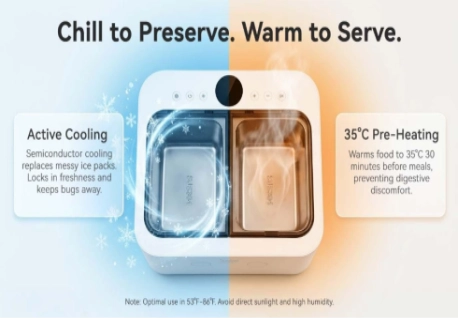
Yes, when the feeder uses active cooling rather than a frozen insert. An automatic wet cat food dispenser refrigerated by a semiconductor module removes the daily job of freezing and replacing ice packs. That makes scheduled wet-food service easier to demonstrate and manage. It does not make food handling automatic. Starting temperature, room conditions, airflow, power, cleaning, and the food maker’s instructions still matter. At DUODPET, we see active cooling as a repeatable system for suitable locations, not a promise that every meal stays safe indefinitely.
How Does a Refrigerated Wet Cat Feeder Work Without Ice Packs?
Active Cooling Replaces a Melting Cold Source
An ice-pack feeder is passive. Its insert absorbs heat until it warms, so performance changes with pack size, freezer temperature, room heat, and time. A refrigerated cat feeder without ice packs uses a powered component to move heat away from the chamber while connected to mains power. The U.S. Department of Energy’s explanation of thermoelectric cooling describes this heat-transfer principle as the Peltier effect.
That distinction matters to a shop or clinic. Staff can demonstrate one routine: load chilled food, program the meal, keep the vents clear, and clean the bowl after use. There are no spare packs occupying freezer space.
A Closed Chamber Helps, but It Is Not a Safety Guarantee
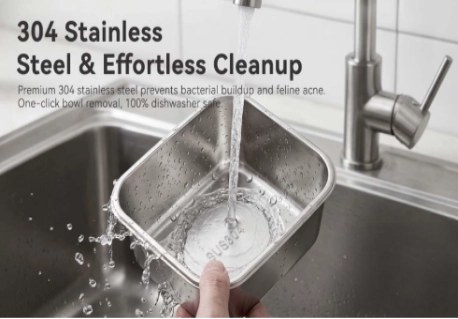
A covered chamber reduces exposure before the scheduled opening, while stainless steel bowls provide a removable food-contact surface. Neither feature replaces temperature control or sanitation. Once the lid opens, the meal faces ordinary room conditions.
We avoid phrases such as “safe all day” unless a time-and-temperature test supports them. The measurable message is stronger: active cooling is designed to provide a cooler pre-service environment, while users follow the food label and remove leftovers promptly.
What Should Buyers Verify in an Automatic Refrigerated Wet Cat Food Dispenser?
Run a Buyer Acceptance Test Before Stocking at Scale
Small B2B buyers do not need a laboratory for a sound first decision. They need a consistent sample test in the warmest normal room where the unit may operate.
- Chill the selected wet food according to its label, then load a realistic portion.
- Place a clean, sanitized, preferably calibrated food-safe probe in the food without blocking the lid or damaging the bowl.
- Record food temperature at loading, before the scheduled opening, and when the meal is served.
- Repeat the test with both chambers loaded and with the feeder positioned as customers will use it.
Log the food type, portion, room temperature, duration, and results. Retailers gain a defensible demonstration, while clinics or catteries can judge fit. If results fall outside the food maker’s guidance, shorten the holding period or choose another method.
Check Power, Placement, and Cleanup
Active cooling needs electricity and airflow. Keep the unit out of direct sun, away from heaters, and clear around its vents. Battery backup may preserve scheduled lid operation, but buyers should not assume it maintains refrigeration unless documentation explicitly says so.
Removable bowls simplify turnover, yet lid edges, the chamber, and surrounding surfaces still need inspection. Clinics and catteries should assign cleaning responsibility rather than treat the feeder as self-maintaining. FDA guidance also calls for washing and drying pet-food bowls after each use.
Where Does the DUODPET FC-S01 Fit?
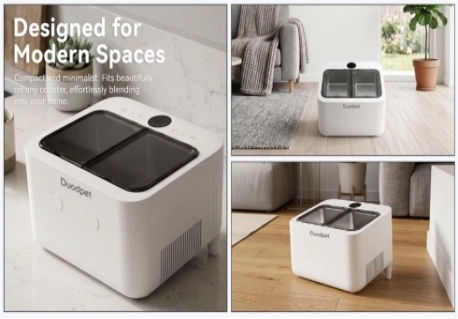
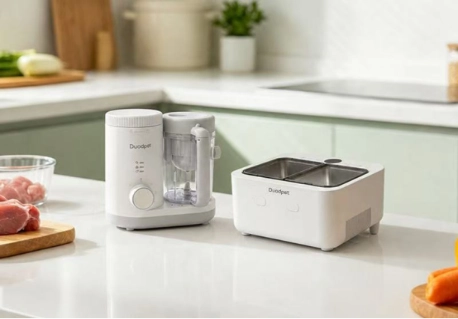
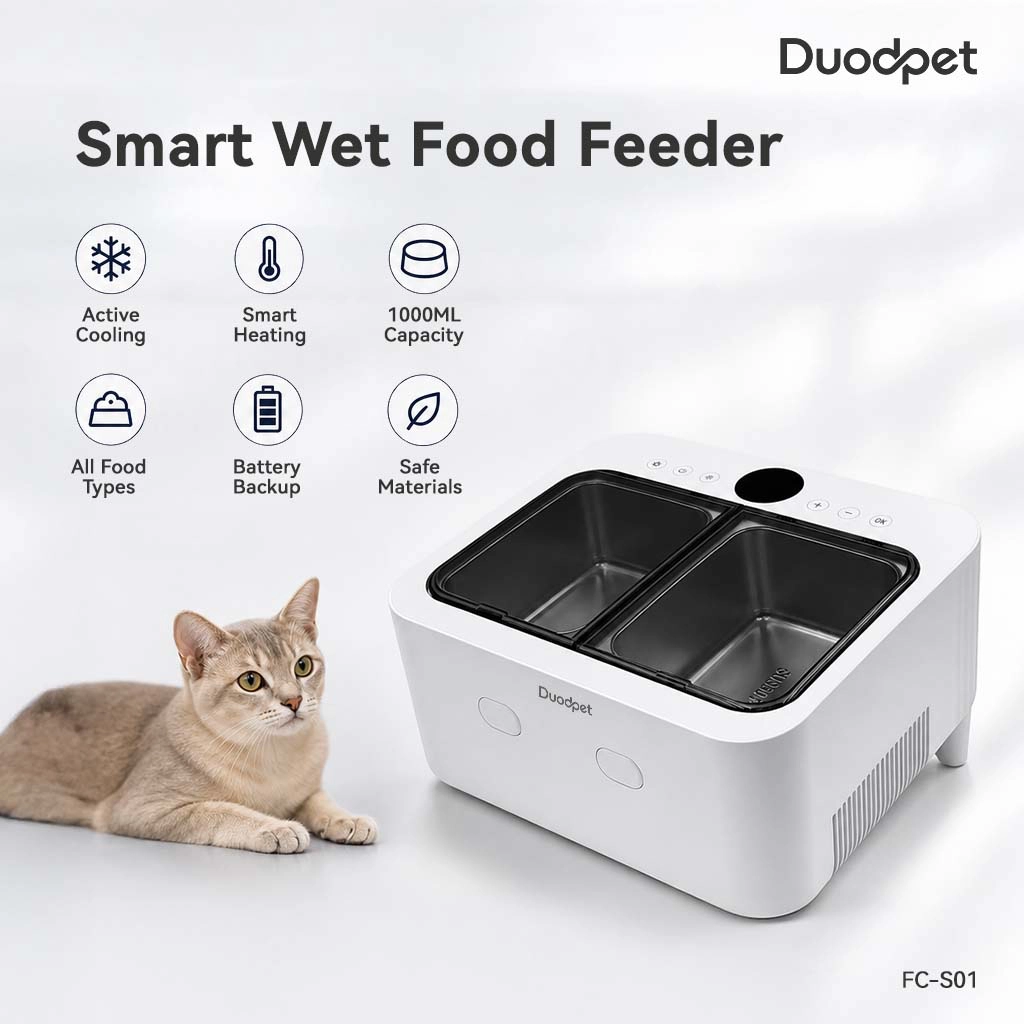
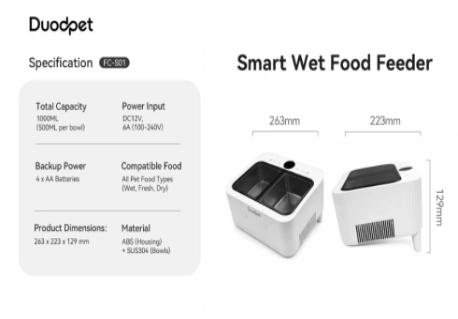
Our DUODPET FC-S01 smart wet food feeder uses active semiconductor cooling, so normal powered operation needs no replaceable ice packs. Two independent 500 mL stainless steel bowls provide 1,000 mL total capacity for scheduled servings or different food formats.
The feeder can warm a scheduled portion to about 35°C, starting roughly 30 minutes before service and stopping when the lid opens. Local buttons work without Wi-Fi or an app. It also has a safety lock, 12 V input, four-AA backup for scheduled opening, and a 10-second voice recording.
These are concrete demonstration points, but we recommend leading with the use case: scheduled wet-food holding and service.
Which Small B2B Buyers Benefit Most?
Premium Pet Stores
For an independent pet store, active cooling is a visible step up from a basic timer feeder. A working display can show the dual chambers, local programming, removable bowls, and cooling-to-warming sequence. Staff can pair it with wet food, cleaning tools, or the DUODPET smart feeding range without claiming one appliance suits every household.
Community Clinics and Breeding Catteries
Clinics and catteries may value scheduled access when animals already have an approved feeding plan. The feeder supports the routine; it does not diagnose, select a diet, or replace observation. Buyers should assess lid-movement acceptance and leftover monitoring.
Regional Wholesalers
Regional distributors should ask whether retailers can explain and support the product after sale. A sample program, quick-start guide, temperature-test script, cleaning demonstration, spare-parts policy, and clear power guidance can reduce confused returns. These tools turn active cooling into a sellable category story.
Active Cooling or Ice Packs: Which Should a Buyer Stock?
| Buying factor | Active cooling feeder | Ice-pack feeder |
| Daily preparation | No pack freezing or swapping during powered use | Packs must be frozen and replaced |
| Power | Requires a suitable outlet for cooling | Can work without mains power |
| Consistency | Designed for repeatable powered cooling | Changes as the pack warms |
| Best fit | Scheduled routines, premium demonstrations, repeat users | Shorter holding periods, travel, simple low-cost use |
Actual performance in either format depends on product design, ambient temperature, portion size, and test conditions. Choose active cooling for reliable power, stable placement, and recurring wet-food routines. Keep an ice-pack option when portability, simplicity, or lower entry price matters more. Stocking both is more useful than declaring one universally superior.
Build a Responsible DUODPET Rollout
We suggest starting with a sample and documented in-store test. Give staff one boundary statement: cooling supports proper food handling but does not replace it. Demonstrate programming and bowl removal so buyers see convenience and maintenance together.
If your business is evaluating this category, contact our wholesale team to discuss samples, channel fit, and support. We can help frame the FC-S01 around verifiable routines rather than vague refrigeration claims.
FAQs
Q: Do refrigerated wet cat feeders need ice packs?
A: Not when they use active powered cooling. Passive feeders still need frozen inserts. Check the documented cooling method because “keeps food fresh” does not always mean active refrigeration.
Q: How long can wet cat food stay in an actively cooled feeder?
A: There is no universal answer. Duration depends on the food, starting temperature, portion, room conditions, feeder performance, and label instructions. Test the intended setup with a food-safe thermometer.
Q: What happens if power fails while the DUODPET FC-S01 is loaded?
A: The four-AA backup supports scheduled opening, not confirmed full active cooling. Treat an outage as a refrigeration break, check food temperature and elapsed time, and discard the meal if safety is uncertain.