



4th September 2026
Why Do Cats Prefer Warm Wet Food Instead of Cold Meals?
-
 author

Many cats perk up when wet food is gently warmed. The simplest reason is smell: a warmer portion gives off more aroma than food straight from the fridge. Cold food is not automatically unsafe, though, and plenty of cats eat it. For a retailer comparing the best wet food dispenser for cats, the useful question is practical. Can the feeder cool a meal before it is due, warm it gradually, and remain easy to clean? At DUODPET, we treat serving temperature as one clue in food acceptance, not a medical promise.
Why Warm Wet Food Smells More Appealing
Heat releases more aroma
Cats often decide with their nose before they take a bite. A refrigerated portion is quieter on the nose; gentle heat lets more odor compounds gather around the bowl. VCA's feline feeding guidance notes that temperature changes odor and that cats tend to eat warm food more readily. It is easy to recognize the pattern at home: the cat sniffs a cold spoonful, leaves, and circles back once it has lost its chill.
Warm is not the same as hot. An International Cat Care feeding guide recommends warming food evenly in water and checking for hot spots; for tube feeding, it prefers that method to a microwave. That makes a better shop-floor explanation too. Show gradual warming instead of telling a customer to “heat the bowl” and leaving the details vague.
What the research actually found
A controlled study of aging cats compared one wet food at 6 C, 21 C, and 37 C. The group chose the 37 C serving most often, and aroma compounds differed by temperature. It is useful evidence, not proof that every cat or recipe behaves the same way. Tufts Petfoodology's review stresses that individual cats varied and only one food was tested.
Why Some Cats Still Choose Cold or Room-Temperature Food
Here is the catch: temperature is only one cue. Texture, recipe, freshness, bowl position, and habit all compete with it. A cat raised on food from the refrigerator may see nothing unusual about a cold portion. Another may turn away from a warmed recipe because its stronger smell recalls illness or medication. The International Cat Care guide to poor appetite notes that learned food aversion can make chilled or room-temperature food the more useful trial.
That distinction belongs in the sales conversation. “Many cats notice a warmer meal more easily” is fair. “Every cat needs warm food” is not. Before recommending hardware, good staff ask three plain questions: What does the cat eat now? Where is the opened food kept? When did the refusal begin?
What Makes the Best Wet Food Dispenser for Cats?
An automatic wet food feeder for cats has a tougher job than a dry-food hopper. It has to look after a moist portion, uncover it on time, and come apart without hiding scraps in awkward seams. One flashy feature will not carry that whole routine.
| Buyer check | Why it matters | Useful demo question |
| Cooling method | Active cooling and passive ice packs create different refill and power routines. | What keeps the portion cool before serving? |
| Warming control | Gradual, scheduled warming is easier to explain than manual heating. | When does warming start and stop? |
| Food-contact parts | Removable stainless steel bowls simplify washing and repeat use. | Can the customer remove the bowl quickly? |
| Schedule and power | Local controls reduce setup friction; outage behavior should be stated precisely. | What still works if Wi-Fi or mains power fails? |
For an in-store comparison, use a wet-food texture customers really buy, not an empty bowl. Listen to the lid. Check its clearance and the depth of the portion. Then remove the bowls and time the wipe-down. Those ordinary moments often explain a return better than the longest specification sheet.
Where the DUODPET FC-S01 Fits
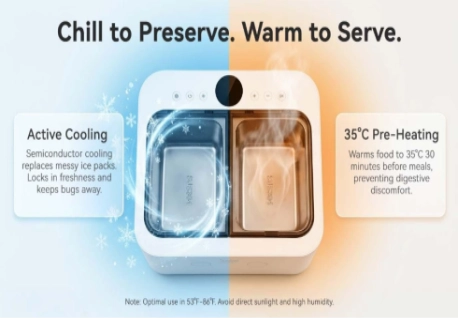
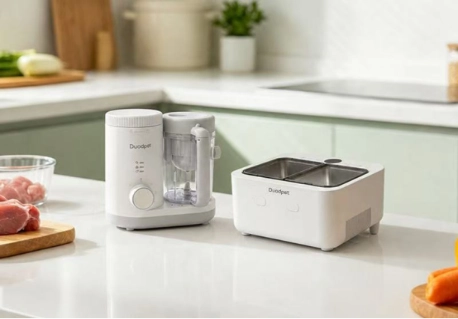
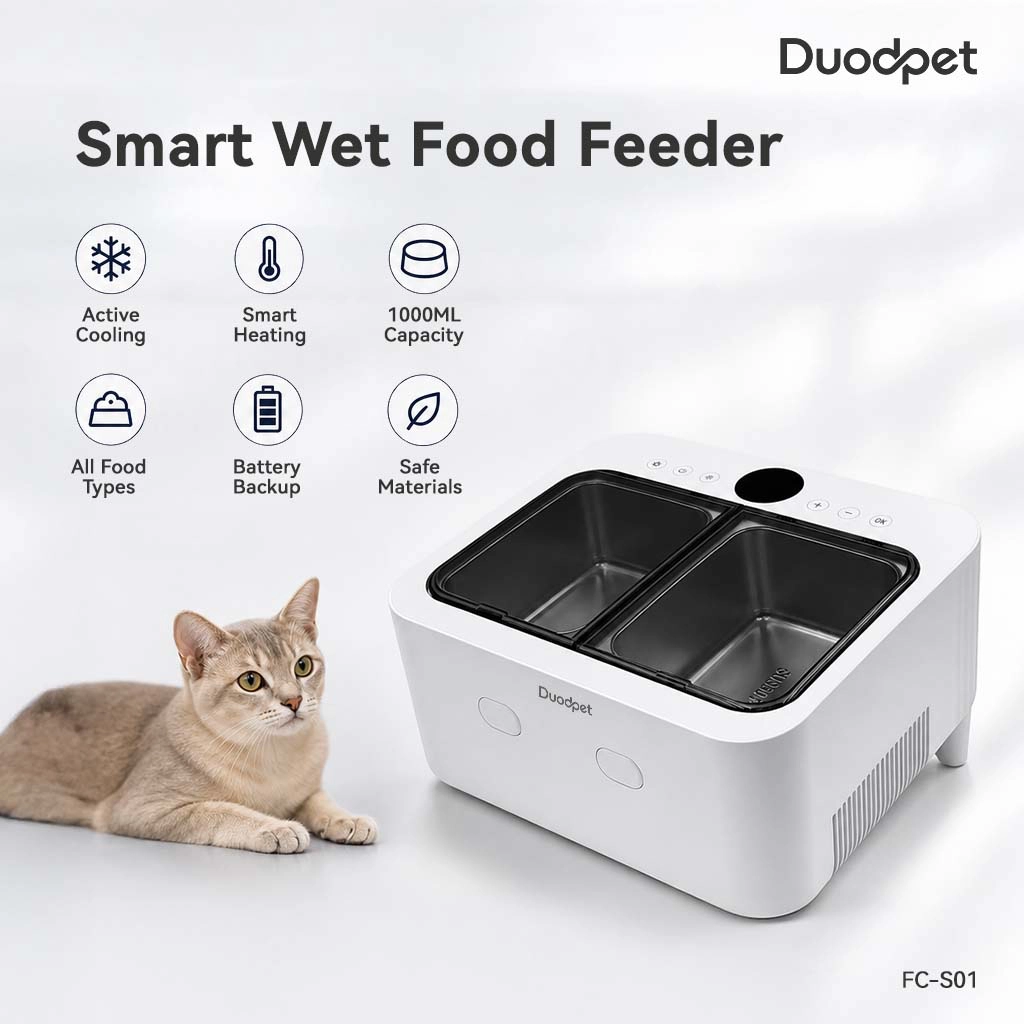
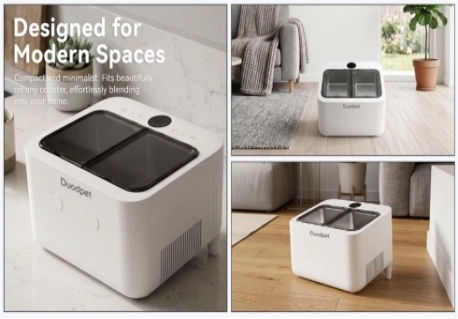
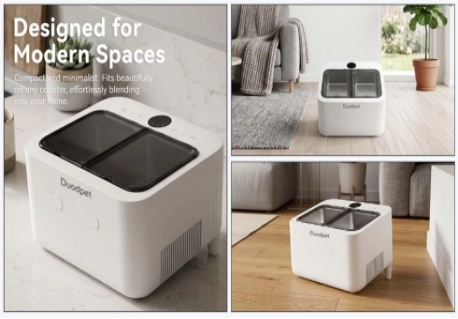
Our DUODPET FC-S01 smart wet food feeder uses active semiconductor cooling before a scheduled meal. About 30 minutes before serving, it warms the portion toward approximately 35 C and stops when the lid opens. It does not hold food warm for hours.
Two 500 mL stainless steel bowls provide 1,000 mL total capacity. Scheduling happens on the unit, without Wi-Fi or an app. Four AA batteries support scheduled lid opening during an outage; we do not present them as a power source for cooling.
This gives staff a simple demonstration: set the time, explain the cool-then-warm sequence, open the lid, and lift out the bowls. Stop there. A refrigerated wet food cat feeder should not be sold with promises about every cat's preference or a clinical result.
How Small B2B Buyers Can Sell the Benefit Responsibly
Premium pet stores
Start with a familiar shopper problem: the cat walks away from refrigerated leftovers, and the owner is away at lunch. Now the cooling and warming sequence has a job. Demonstrate it beside compatible wet food, a cleaning brush, and a short temperature card.
Clinics and catteries
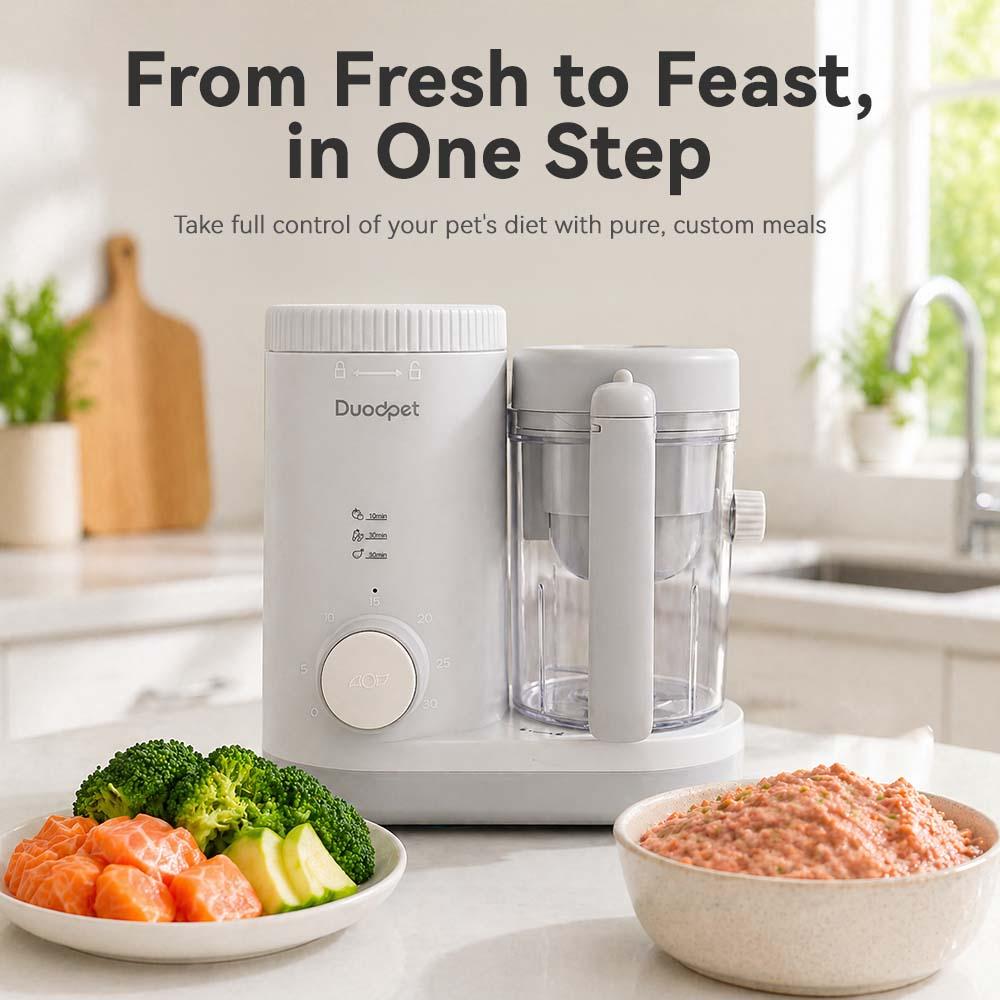
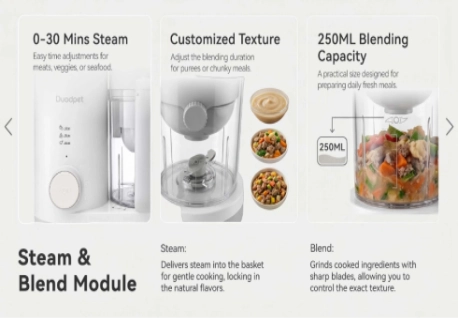
Use the feeder for repeatable portions and scheduled service, not to diagnose or treat appetite loss. Persistent refusal, weight change, vomiting, or other illness signs need veterinary assessment. For fresh-food routines, our DUODPET PFM2711 fresh food maker steams and blends food before correct cooling, storage, and portioning; it does not replace a complete nutrition plan.
Regional wholesalers
Before adding another carton to the catalogue, ask what will make the order fail. Is mains power reliable? Does the account expect active cooling, or will an ice-pack routine do? Will an app help, or simply add setup calls? Give staff one working sample, spell out the backup-power limit, and collect cleaning and acceptance notes before widening the order.

Build a Better Warm-Wet-Food Demonstration
Keep the demonstration small. Divide one wet-food recipe into equal portions and run the scheduled cycle. Compare aroma and serving temperature without pretending one test speaks for every cat. Finish by timing bowl removal and washing. The retailer now has something useful to discuss, not another row of claims.
For assortment planning, wholesale terms, or a sample discussion, contact our wholesale team. We can help buyers decide whether the FC-S01 belongs as a single premium SKU, a fresh-feeding bundle, or a focused clinic and cattery solution.
FAQs
Q: Should wet cat food be served warm or cold?
A: Many cats notice food near room or body temperature because it releases more aroma. Others prefer cooler food due to habit or texture. Start with the normal routine and change temperature gradually.
Q: Can I microwave wet cat food before serving?
A: Yes, but microwaves may create hot spots. Stir well, check several places, and never serve the food hot. A cat feeder that warms wet food gradually makes the routine more repeatable.
Q: Does the DUODPET FC-S01 keep food warm all day?
A: No. The FC-S01 actively cools food before the scheduled meal. It begins preheating about 30 minutes before serving, brings the portion toward approximately 35 C, and stops warming when the lid opens. This is scheduled warming, not all-day warm holding.