



9th October 2026
What Makes a Pet Fresh Food Maker a Good Choice?
-
 author

Imagine the end of a workday. One pet is hungry, another has rejected yesterday's texture, and dinner needs to happen quickly. A pet fresh food maker earns its place when it shortens that scramble without creating a second job at the sink. The buyer's test is practical: does it make the right portion, with a texture the pet will eat, and can the parts be cleaned without a fight?
Decide the Meal Before You Compare Machines
Fresh food is not automatically complete. Cats and dogs need different ingredients and textures, and an allergy or diagnosed condition may call for a veterinarian-approved recipe. The machine can cook and blend; the nutrition decision stays with the owner and the animal's professional adviser.
That is why capacity and texture matter before a long feature list. A small batch may suit one cat and be inconvenient for a multi-pet household. A smooth blend may help a pet with dental limits, while another animal may do better with a little texture left in. Choose the routine first, then see whether the appliance supports it.

How Does a Pet Fresh Food Maker Handle Steam and Blending?
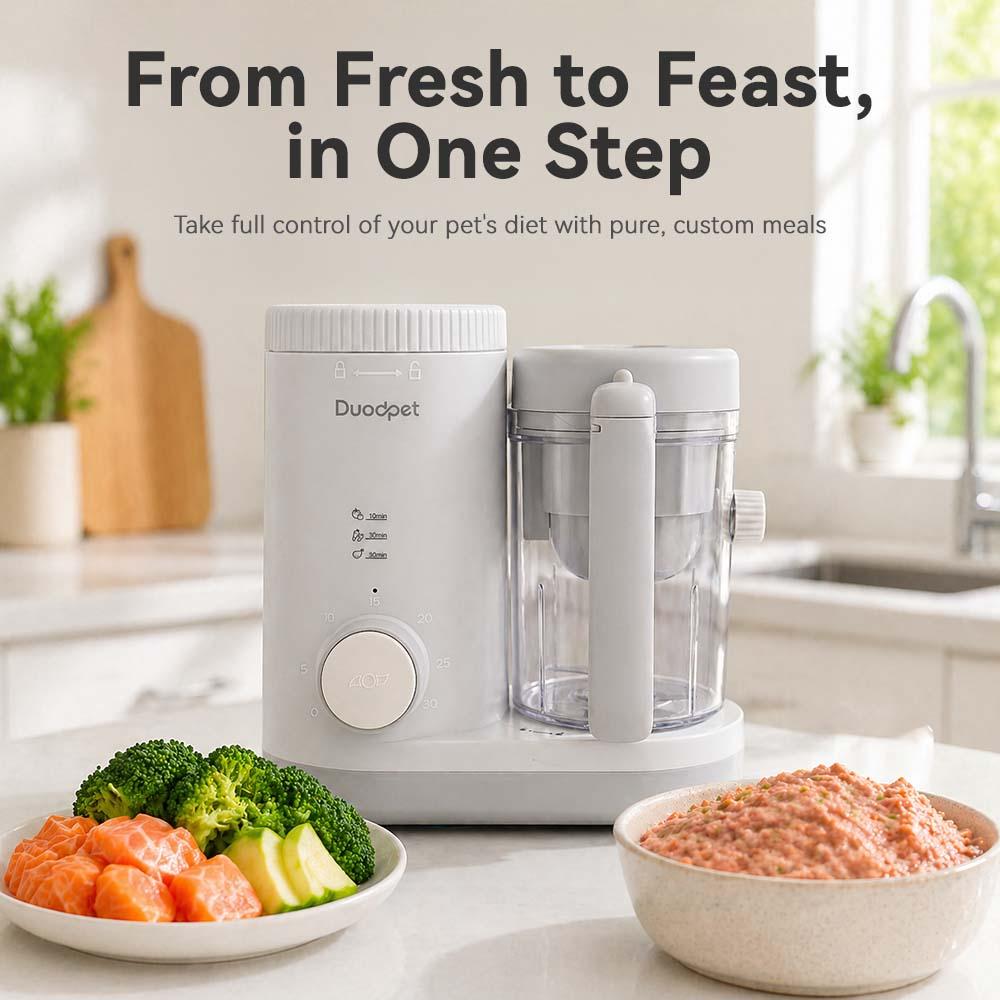
The PFM2711 Pet Fresh Food Maker combines steaming and blending. The specification lists a 200 ml stainless-steel water tank, a 250 ml Tritan jar, 300 W for steam, and 80 W for blending. Those figures answer two everyday questions: how much can be made, and will the routine fit the counter?
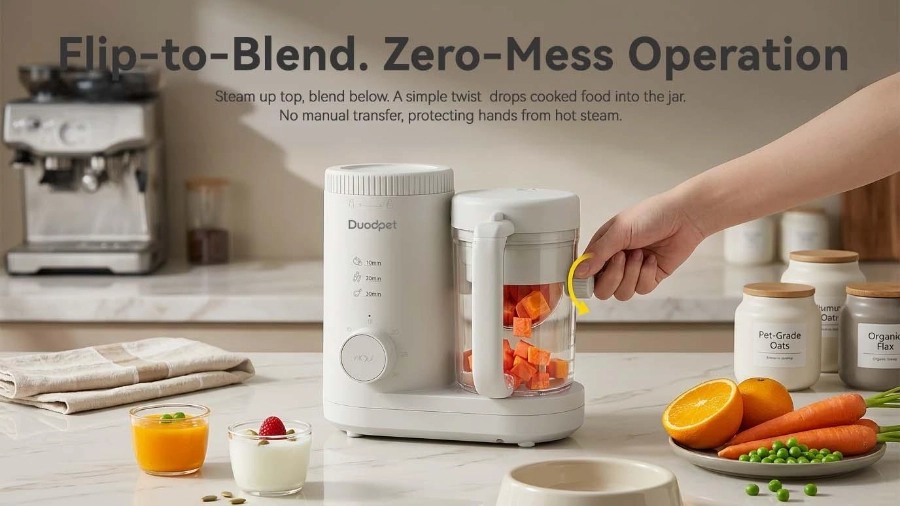
Steam softens ingredients for blending without a pan-to-jar transfer. With the PFM2711's flip-to-blend design, cooked ingredients move into the jar instead of being scooped across the counter. The batch is still hot, so cool it before serving or refrigeration and portion it while the texture is easy to inspect.
This is where a home-prepared meal gains flexibility. Choose the protein, vegetables, water, and final consistency. If a pet refuses a batch, change one variable next time instead of throwing out an entire product line.
Read the Material List, Then Look at the Seams
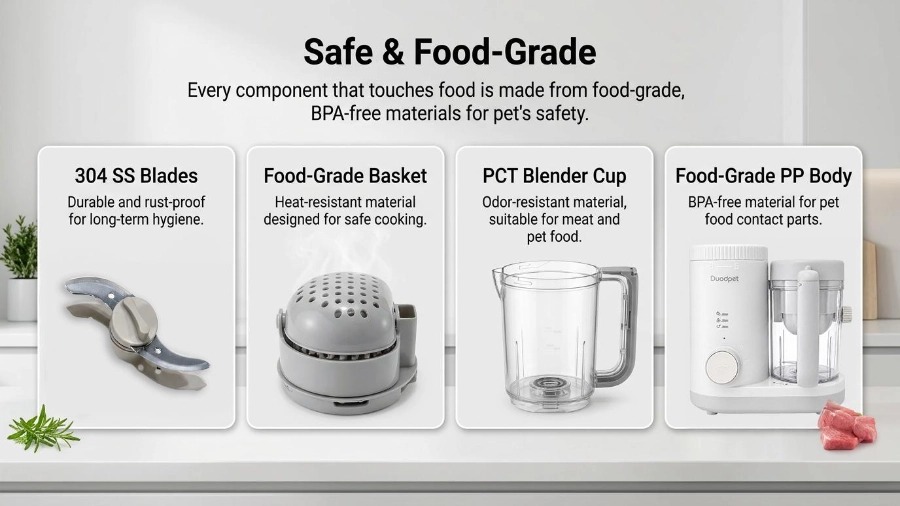
The PFM2711 lists 304 stainless steel for the water tank and blade, plus a BPA-free Tritan jar. Good materials help, but a cracked, warped, or damp part can still cause trouble. Inspect the machine after a few cycles, not only when it comes out of the box.
Can the jar come apart without wrestling with a gasket? Can you see around the blade? Is there a narrow groove where wet food can dry unnoticed? A clean answer to those questions is worth more than a decorative finish. Check the manual for temperature limits and approved cleaning methods as well; material names do not replace care instructions.
A Little Protection Helps on Busy Days
Steam, hot water, blades, and electricity make a demanding countertop combination. The PFM2711 has dry-burn and overheating protection that cuts power when sensors detect an unsafe condition. It can catch a missed step, but the water level, locking points, and work surface still deserve attention.
Simple controls help too. “Add water, load ingredients, choose the program, blend” is a routine people can remember. The PFM2711 fresh food maker gives buyers the full voltage, capacity, and material details, so a household or reseller can check compatibility before committing.
Cleaning Is Part of the Feeding Plan
Fresh food leaves more behind than dry kibble. The PFM2711 uses a detachable jar, blade assembly, and steam basket, and the product information says those parts are dishwasher safe. That combination is useful because it makes the food-contact surfaces visible and gives the owner a realistic way to wash them after each batch.
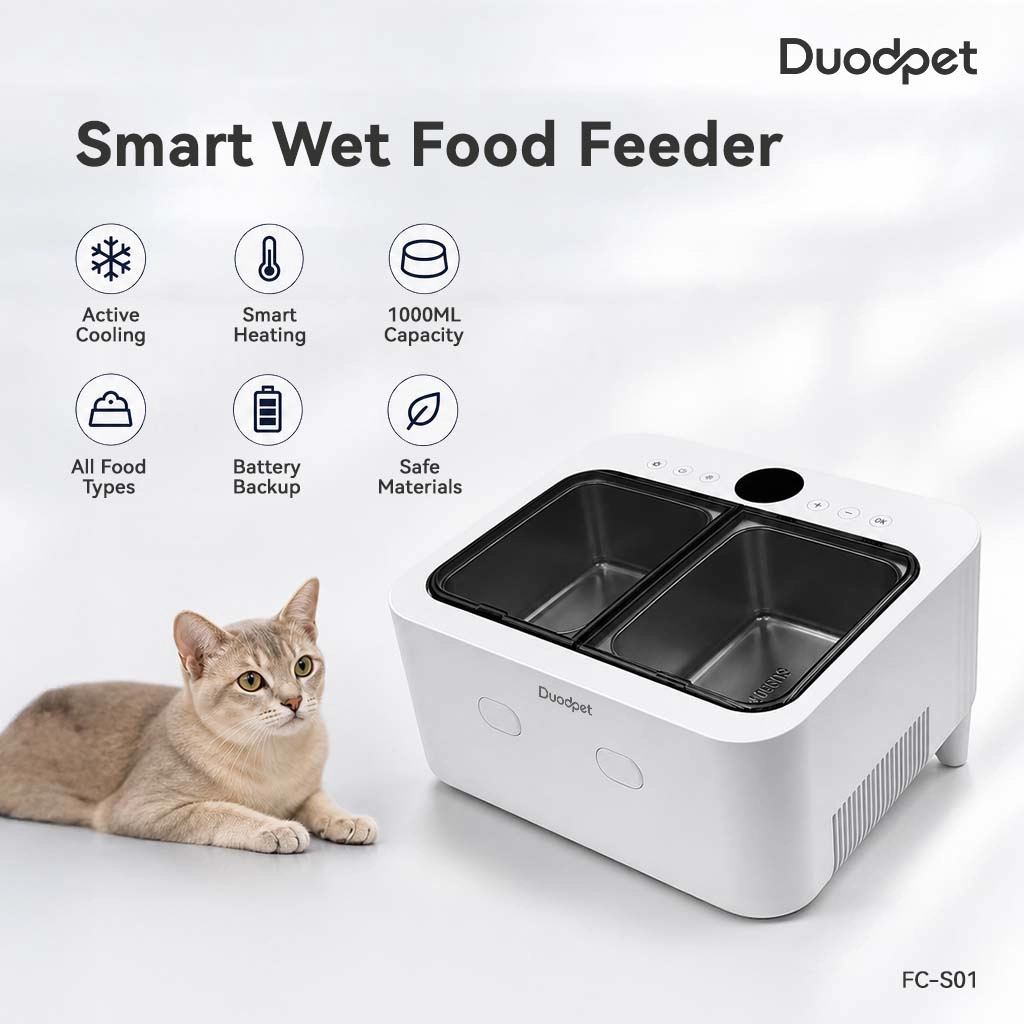
Keep the routine boring: take the parts apart, rinse before residue dries, wash as directed, inspect the blade and seals, then let everything dry. Don't close a damp jar for tomorrow. If the home also uses an automated feeder, wash that bowl and lid separately. The FC-S01 smart wet food feeder can chill and warm wet meals, but cooling never makes an old, dirty bowl acceptable.
Think Past the Preparation Step
What happens after blending? Some owners serve immediately. Others cool the food, refrigerate portions, and serve them later. The choice changes which equipment matters most. A fresh food maker can prepare a meal neatly, but the cold chain, storage container, and serving bowl still belong in the plan.
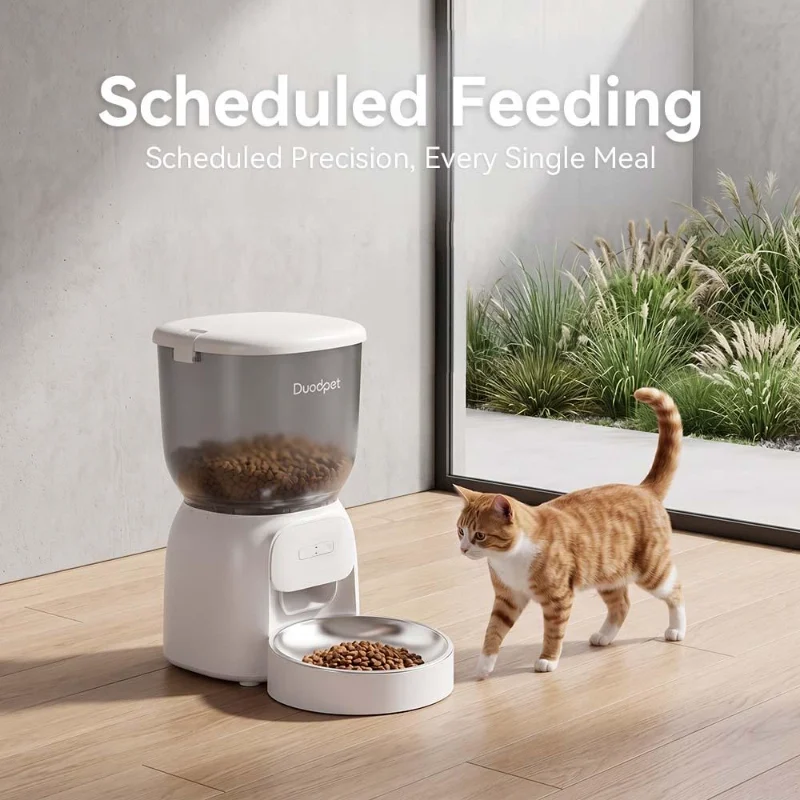
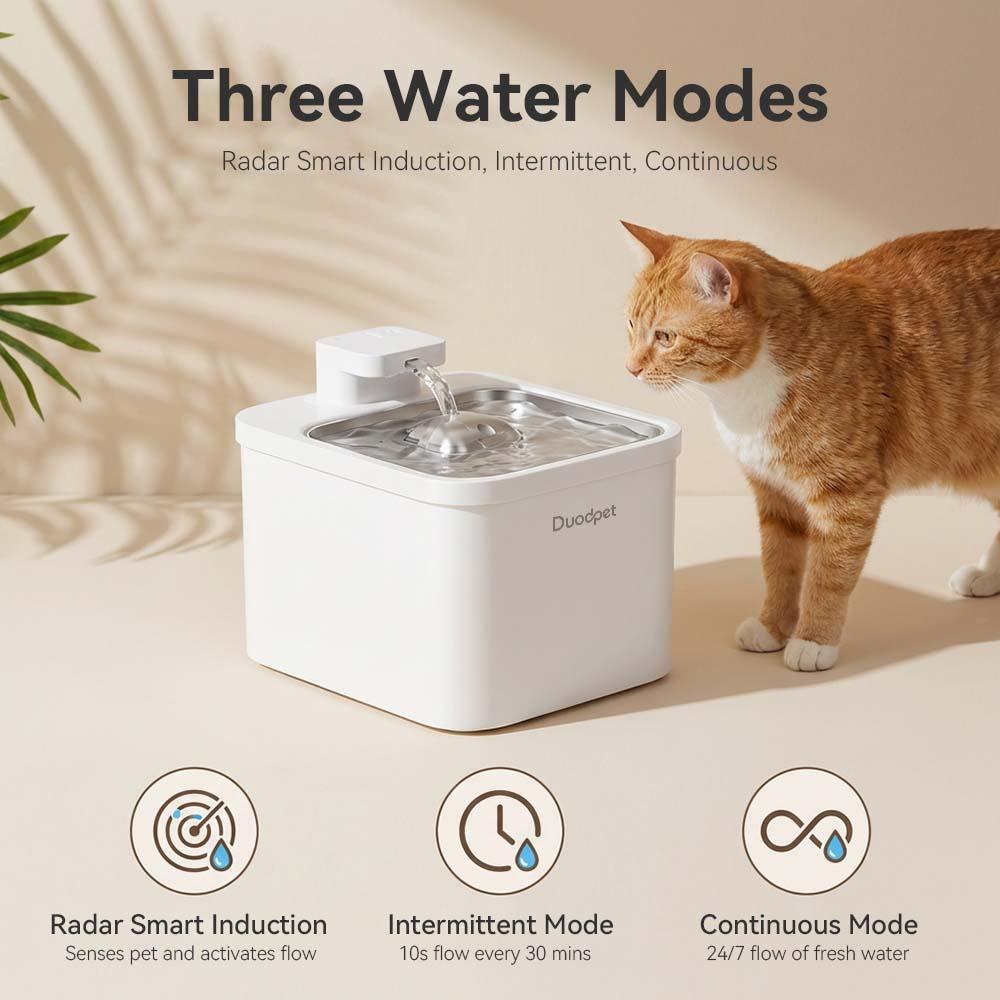
The DUODPET product range places the PFM2711 beside wet-food and dry-food feeders, which is useful for a household building a complete routine. A distributor or private-label buyer should ask a few less glamorous questions too: which voltage is supplied, what does the manual say, are replacement parts available, and who answers a support request?
DUODPET presents OEM and ODM support for smart pet products. Buyers can use the OEM and ODM support team to discuss packaging, market requirements, and the version that will actually be sold. A technically good appliance still needs a support path once it reaches a customer's kitchen.
Run One Ordinary Batch Before You Commit
Before it becomes part of the daily routine, run one ordinary batch. Use the expected portion, check the cooled texture, take every washable part apart, and time the cleanup. If the batch is too large, too wet, or awkward to wash, ownership won't fix that later.
The ideal pet fresh food maker is therefore not the one with the longest specification list. It is the one that fits the pet's portion, makes the intended texture, keeps food-contact parts easy to inspect, and makes the safe routine easy to repeat. Steam, blending, dry-burn protection, and detachable parts all help, but recipe review and good storage still sit with the owner.
FAQs
Q: Can a pet fresh food maker replace veterinary nutrition advice?
A: No. It can steam, blend, and portion ingredients, but it can't decide whether a recipe is complete or suitable for a medical condition. Use professional guidance for allergies, kidney disease, digestive problems, or another diagnosed need.
Q: Will a 250 ml blending jar suit every household?
A: Not always. The PFM2711 lists a 250 ml jar, so compare that capacity with the pet's serving size and the number of meals made at once. One small batch may be perfect for a cat and too little for several pets.
Q: What should I check before using a fresh food maker every day?
A: Run a supervised cycle and check the water amount, locking points, cooling plan, and cleaning instructions. Take the food-contact parts apart afterward, and make sure every piece dries before you rebuild the machine.