



24th September 2026
How Should Pet Stores Evaluate a Pet Water Filter?
-
 author

A pet water filter is easy to overlook when a buyer is focused on reservoir size, power, or finish. Yet the filter often determines whether store staff can explain upkeep, identify a replacement, and help a customer keep the fountain assembled correctly.
For retail evaluation, the right question is not whether a cartridge looks advanced. Buyers need to know that it fits the exact model, sits in the intended water path, carries supportable claims, and can be reordered under a clear reference.
Start With Pet Water Filter Compatibility
Compatibility comes before filtration language. Two cartridges can share a color and outline while differing in thickness, cutouts, tabs, or the way they seat under a tray. A near match is not enough if water can move around the filter or if the surrounding parts no longer close as designed.
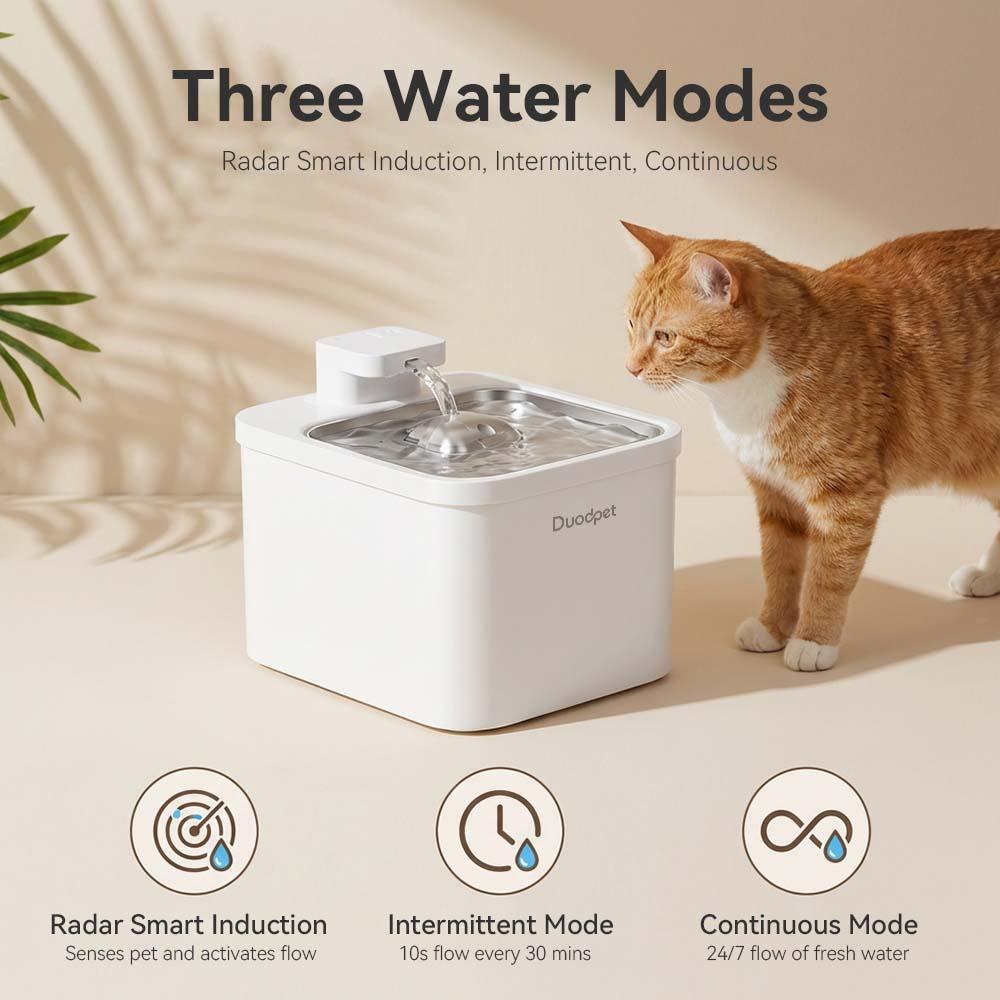
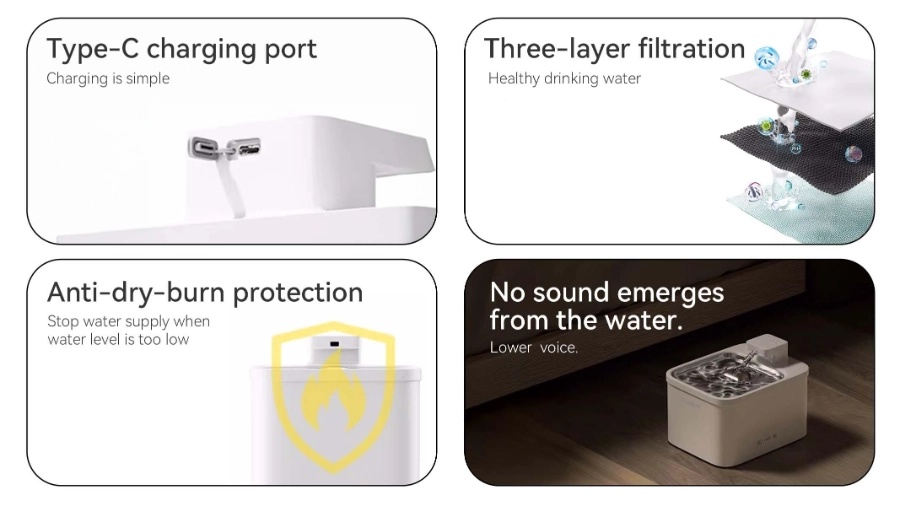
The DUODPET W01-K product page identifies triple active filtration and a detachable design. A buyer should match the supplied filter to the product version in hand and request the current reference before preparing shelf copy or an accessory order.
Ask What Each Filter Stage Is Meant to Do
The number of layers is useful only when the supplier can explain their intended jobs. Retailers should keep their wording within that evidence boundary.
During a sample review, ask for the current filter specification, the approved description of every layer, and any test report behind a measurable claim. If documentation supports only a general filtration statement, the product listing should remain general. A buyer should never turn a diagram into an unsupported promise about bacteria, minerals, chemicals, or health outcomes.
Follow the Complete Water Path
A cartridge works as part of a system, not as a loose pad. Buyers should trace where water enters, which surface it meets first, where debris can collect, and how the filtered water returns to the tray. This reveals whether the orientation is obvious and whether an incorrectly seated filter would be visible to a customer.
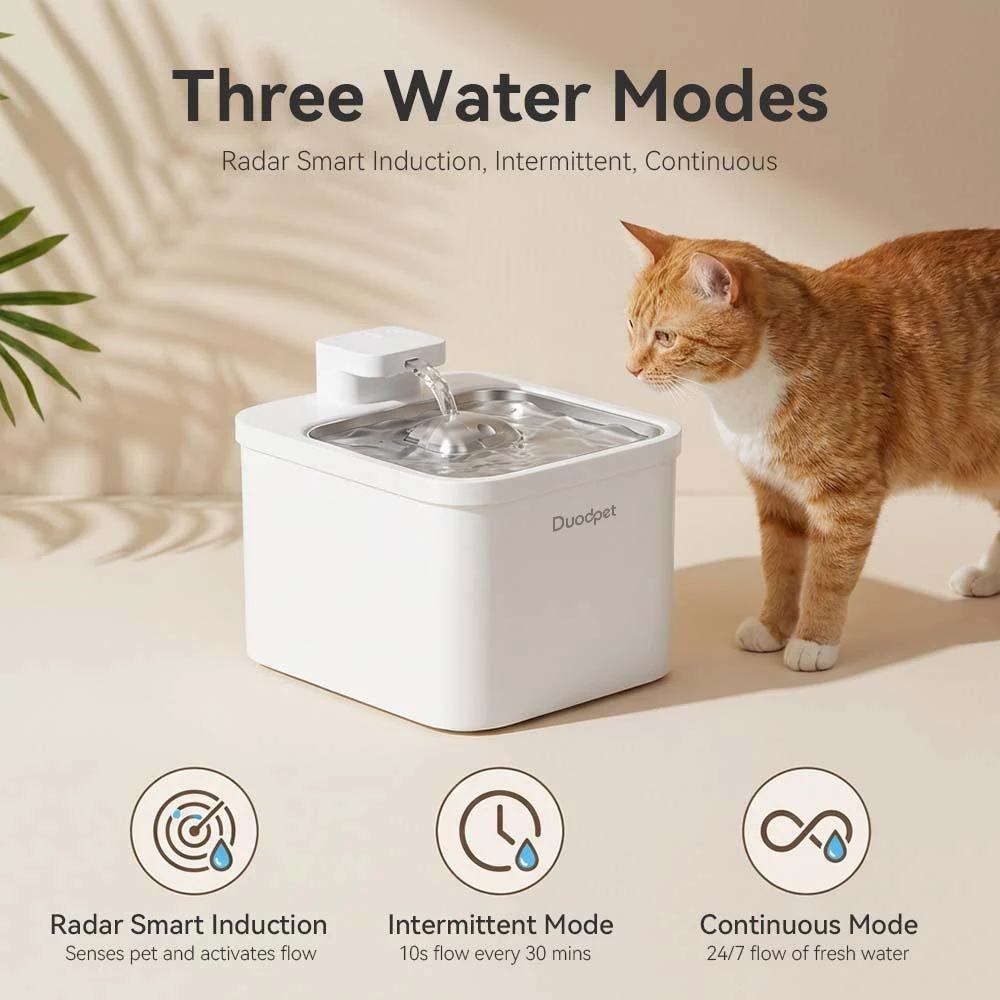
The broader DUODPET drinking collection gives retailers category context, but filter decisions still belong to a specific model. A filter used in one fountain should not be presented as compatible with another product merely because both appear in the same range. Model mapping needs an explicit supplier reference.
Check Removal Without Guesswork
Store staff should be able to remove and replace the filter by following the supplied instructions. The useful observations are simple: which part lifts first, which side of the filter faces the water path, whether the cartridge lies flat, and how the tray returns to its working position.
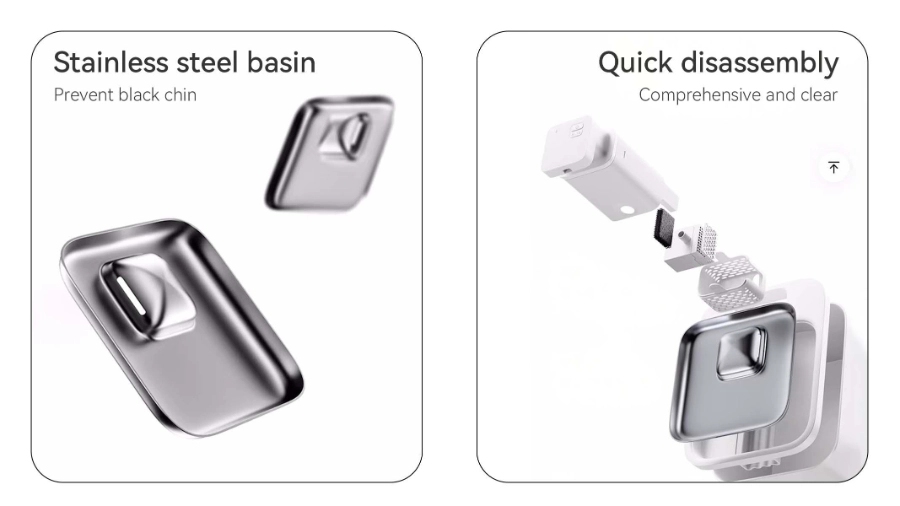
The official disassembly image for the W01-K separates the upper housing, a dark filter piece, a perforated insert, and the stainless-steel basin. That visual can help a buyer understand the assembly, but it does not replace model-specific instructions. If staff can assemble the sample in more than one plausible way, the documentation needs clarification before launch.
Observe Flow After Handling the Filter
After the filter is removed and returned, the fountain should be operated in the configuration approved by the supplier. Buyers can watch whether water follows the intended route, whether the tray sits evenly, and whether the filter shifts during startup. The purpose is to catch an assembly or fit problem, not to improvise a laboratory filtration test.
Repeat the observation after staff have followed the same instructions from the beginning. A repeatable setup is more useful than a single successful demonstration because it shows whether training materials are clear enough for receiving, merchandising, and support teams.
Keep Cleaning Separate From Replacement
Cleaning the fountain and replacing a disposable filter are related tasks, but they are not interchangeable. A fresh cartridge does not clean the tray, reservoir, seams, or other removable parts. Likewise, rinsing surrounding components does not prove that a disposable cartridge remains suitable for continued use.
Retailers should request the approved cleaning method and replacement guidance for the exact filter. The public W01-K page confirms a detachable design. Store copy should not invent one. If timing depends on use conditions, the instructions should explain how customers are meant to recognize the appropriate service point.
Plan the Replacement SKU Before Launch
A fountain sale creates a later accessory question. Before the commercial order, buyers should confirm the replacement-filter name or code, compatible model list, retail pack quantity, labeling, and reorder channel. The fountain carton, accessory pack, product page, and support reply should all use the same identification.
The official DUODPET contact page is the right place to confirm the current sample configuration, replacement reference, packaging, and commercial availability. If the replacement program is still being finalized, a retailer should know that before promising ongoing stock to customers.
Use One Model-Specific Receiving Check
A receiving check should connect the product carton, fountain label, supplied cartridge, instructions, and replacement pack. Staff can compare those items, assemble the fountain as directed, observe the water path, and record any mismatch in naming or fit. The same check can be repeated when packaging or components change.
This process does not establish filter life or contaminant-removal performance. It gives a retail team something more practical: confidence that the pet water filter belongs to the sampled model and can be installed without guesswork. Staff can also identify it correctly when a customer returns for a replacement.
FAQs
Q: Are pet water filters interchangeable between fountain models?
A: Retailers should assume they are model-specific unless current supplier documentation says otherwise. Similar shape or color does not confirm the same thickness, cutouts, seating, or water path. The fountain model and replacement-filter reference should match before the filter is stocked or recommended.
Q: What filter claims should a pet store verify?
A: A store should verify the intended role of each layer and the evidence behind any measurable reduction, purification, or service-life claim. When the available documentation supports only a general filtration description, product copy should not add contaminant, medical, or performance promises.
Q: What should buyers confirm before ordering replacement filters?
A: Buyers should confirm the filter code, compatible fountain version, pack quantity, installation direction, replacement guidance, packaging labels, reorder channel, and current availability. Those details should match across the sample, instructions, accessory pack, product page, and supplier response.